Design Engineering at Shepherd

Design Engineering at Shepherd
Where product thinking, design craft, and code execution meet.
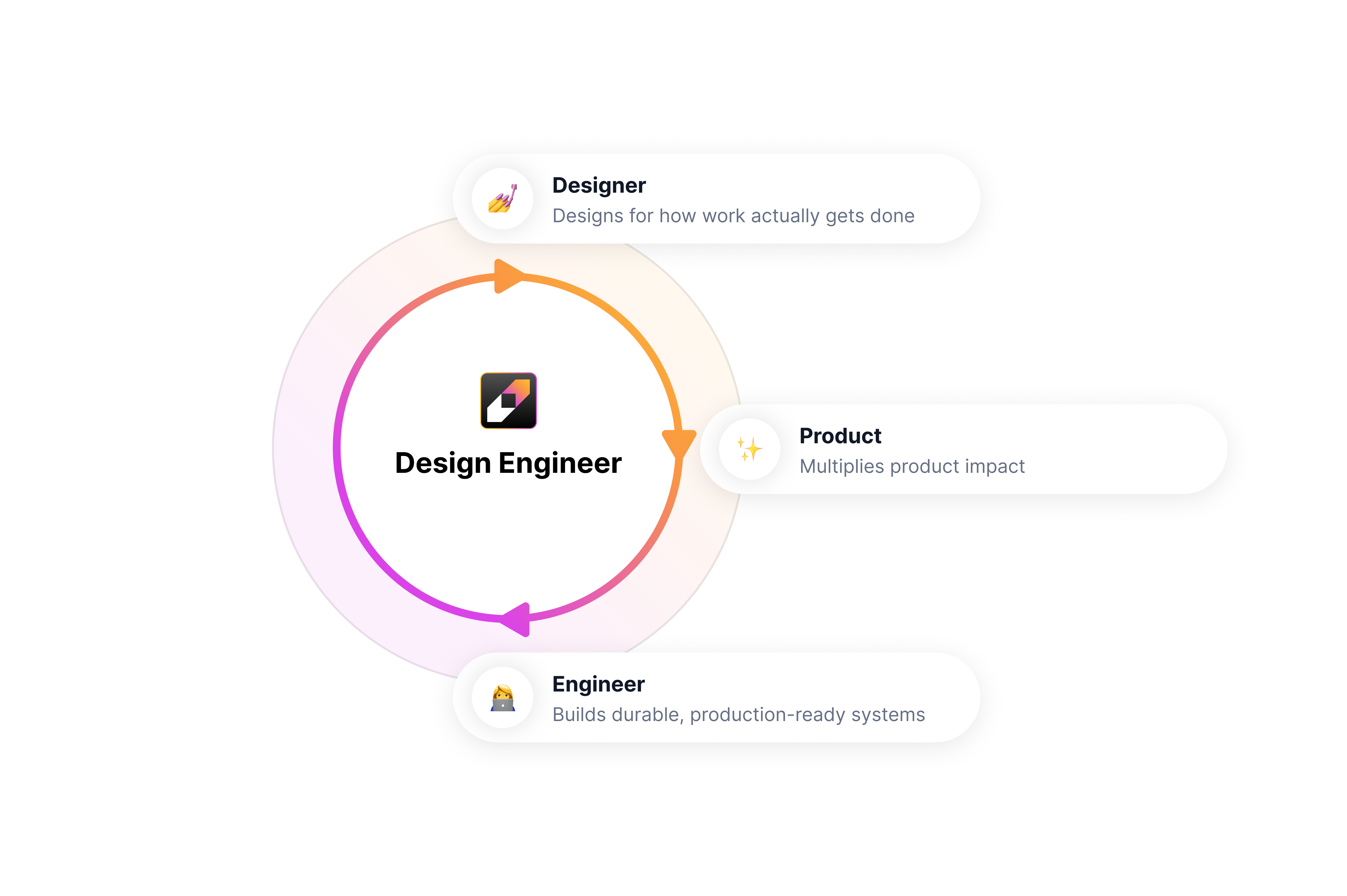
Expectations for building software keep rising. At Shepherd, Design Engineers combine product thinking, design skill, and engineering execution into one powerful role. The goal is simple: ship clean, delightful products that solve the complexities of insurance workflows.
What is a Design Engineer at Shepherd?
As Shepherd scales and expands into more complex insurance products, gaps between product decisions and implementation create risk and slow teams down. Design Engineering exists to close that gap.
Design Engineers work directly with internal insurance leaders, underwriters, and customer success associates. Rather than hand ideas off from team to team, a Design Engineer owns the full journey. From pain point → to design → to shipped code. That means fewer handoffs, faster delivery, and higher-quality results.
How Design Engineers Work
Design Engineers at Shepherd wear a lot of hats but we don’t wear them all at once. Instead, we shift modes depending on what the product needs most.
There are two core ways we work:
1. Vertical ownership
We lead projects end to end, starting with unclear problems rather than polished specs. The work runs for a couple of months or a full quarter and does not have a silver bullet answer.
These projects push us to learn as we go or as we say at Shepherd “Build the plane, as you fly it”. We sketch in Figma or code, test early with users, and revise until things feel right. It's hands-on, high-autonomy work.
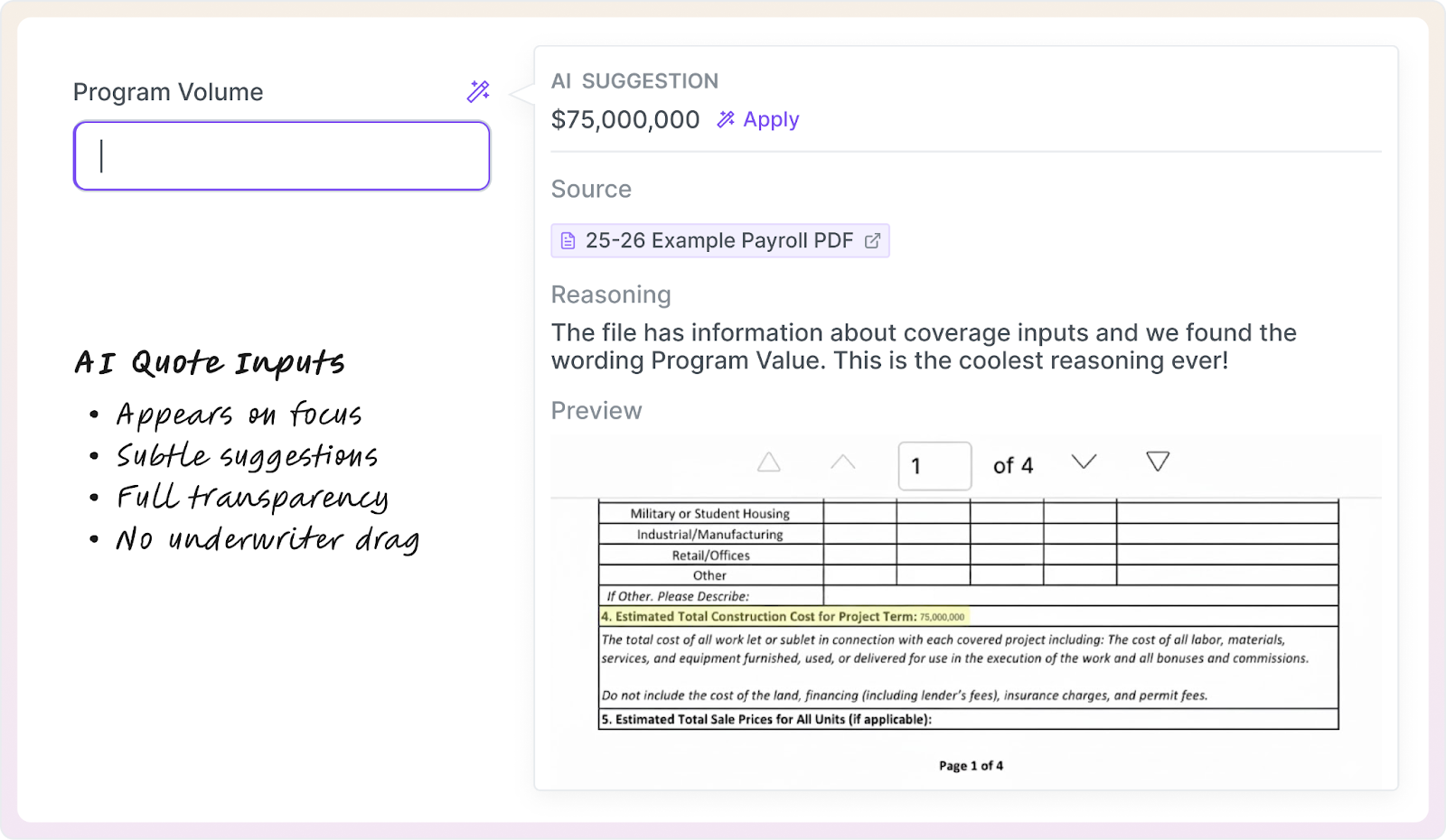
This quarter, one project tackled AI-assisted quote inputs. The challenge was to help underwriters move faster without compromising accuracy. The result was transparent, overridable suggestions powered by AI that appeared only when relevant. We decided not to auto apply the suggestions because in insurance, a bad guess isn't just annoying, it’s expensive.
2. Horizontal support
Alongside owning projects, Design Engineers raise the floor for how teams across Shepherd build products.
This work is horizontal by nature. Instead of shipping one feature, we invest in systems, patterns, and early validation that make many features better. The goal is to reduce delivery risk, increase consistency, and help teams move faster without cutting corners.
Design Engineers partner closely with product managers, engineers, and insurance stakeholders to tackle problems that sit between disciplines, such as:
- Designing and building shared UI components used across underwriting, quoting, and policy workflows
- Defining frontend patterns and guidelines that keep the codebase clean as the product scales
- Prototyping underwriter flows to pressure-test usability, edge cases, and compliance before teams commit to full builds
- Creating proof-of-concepts to validate domain logic, or AI behavior early
Progress is shared directly to the CTO every week during Design Day.
The Design Engineering Toolkit
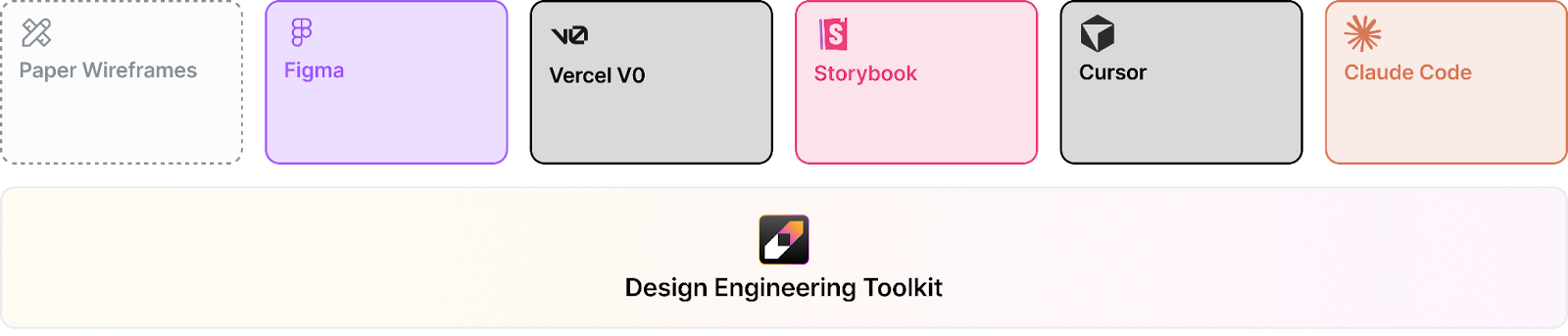
Our work spans strategy, design, and engineering. Our tools support fast thinking and fast iteration. These are the tools we use today:
- Paper wireframes (yes, still useful!)
- Figma for systems, flows, and detailed design
- Vercel v0 for rapid UI iteration
- Storybook for component development
- Cursor
- Claude Code
💅 Coming soon: This is the first look behind the curtain at Shepherd. We will share how we actually build, where the hard choices live, and what most teams never write down.
Join Shepherd
If you want to grow across product strategy, design, and engineering, please apply today!